15 Easy Front Yard Landscaping Ideas That Instantly Boost Curb Appeal
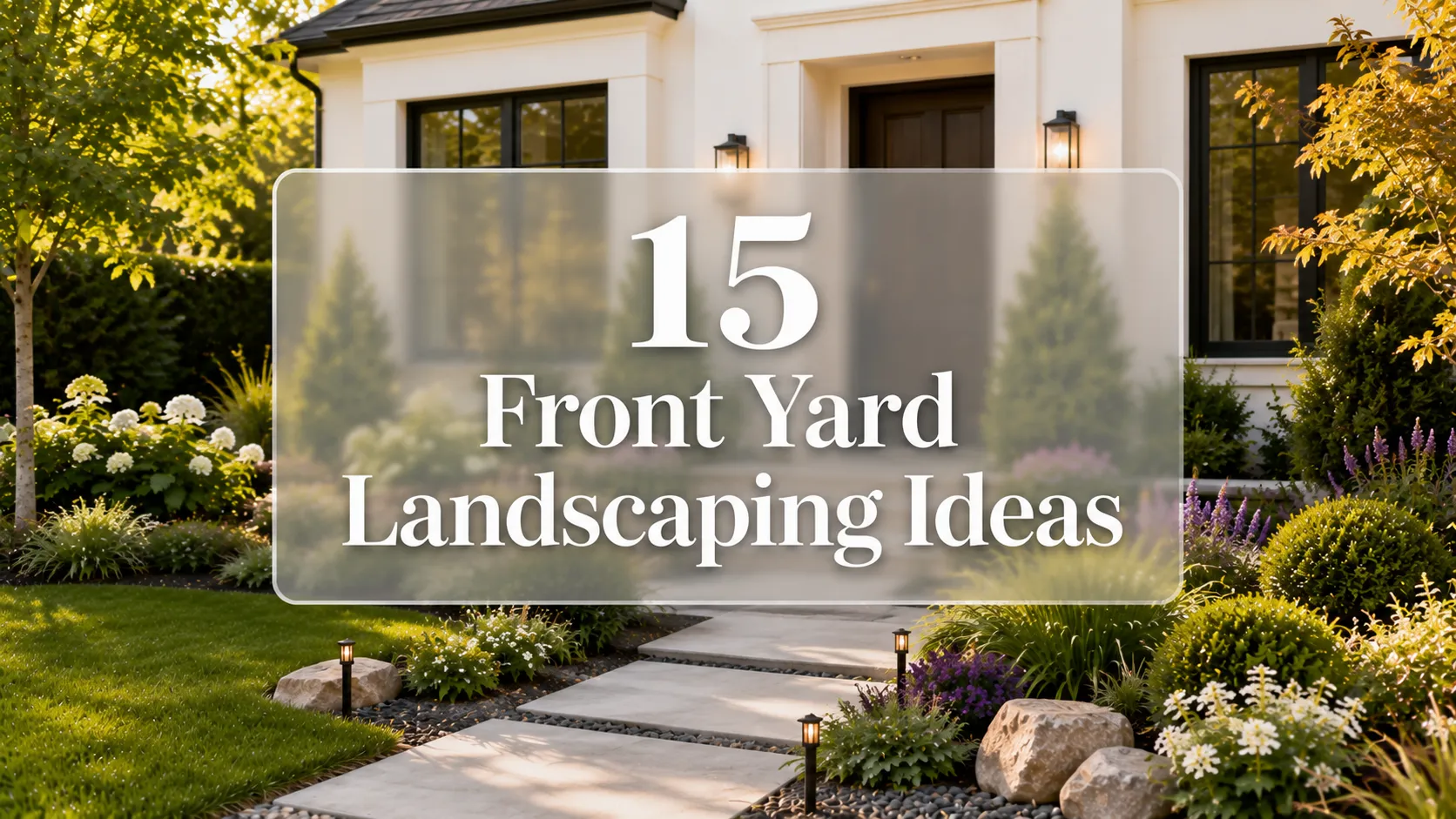
First impressions start before anyone steps through your front door. Front Yard Landscaping Ideas can completely transform an ordinary exterior into a space that feels warm, welcoming, and beautifully put together without requiring a massive budget or a full renovation.
Whether your yard feels plain, outdated, or simply lacks personality, the right landscaping details can make an incredible difference. From elegant flower beds and statement trees to charming pathways and stylish planters, even small updates can create a polished look that makes your home stand out. In my experience, homeowners are often surprised by how much curb appeal improves when they focus on thoughtful layers, balanced planting, and a few carefully chosen focal points instead of trying to redesign everything at once.
This collection is filled with practical inspiration that’s easy to picture and even easier to recreate. Each idea is designed to help you build a front yard that looks inviting in every season while staying manageable for everyday life. You’ll discover simple upgrades that add color, texture, structure, and lasting beauty, giving you plenty of inspiration to save on Pinterest and confidently bring to your own home.
1- Curved Flower Beds
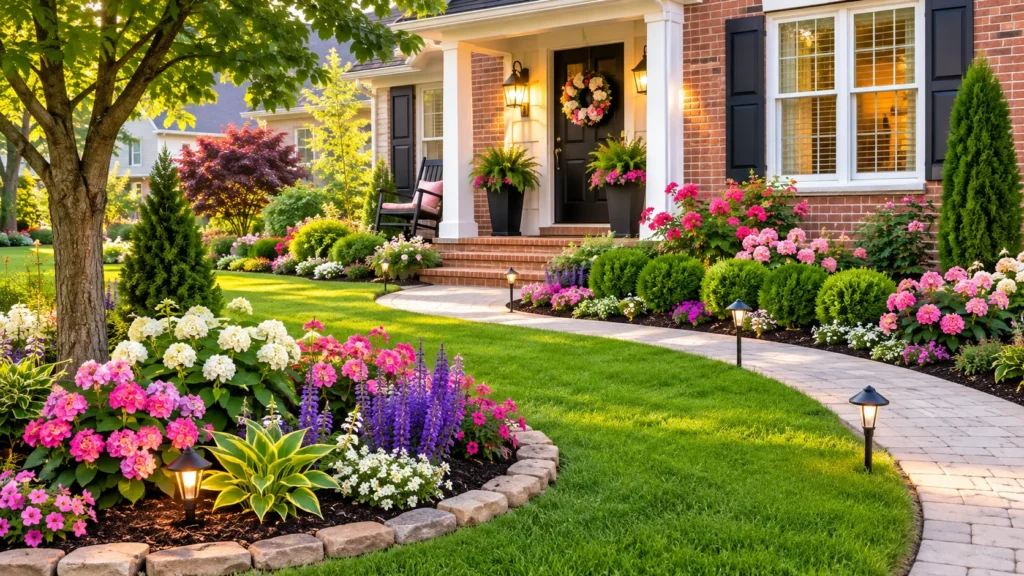
- Softens straight lawn edges and rigid architecture.
- Adds layered color without overwhelming the yard.
- Naturally guides attention toward the front entrance.
- Makes smaller planting areas feel fuller and more intentional.
A curved flower bed can make a plain front lawn feel instantly softer and more welcoming. Instead of lining plants in a stiff row, shape the border with gentle bends that guide the eye toward the entry. This works especially well around walkways, porch corners, or mature trees. Mix low ground covers, medium flowering plants, and a few taller accents for layered depth. The result feels polished without looking overly formal, and even a small bed can make the entire yard appear more thoughtfully designed, colorful, balanced, and complete throughout the growing season.
In my experience, the easiest beds to maintain use a simple planting rhythm rather than too many varieties. Repeat three or four plants across the curve, leaving enough space for mature growth. Add mulch to sharpen the outline, suppress weeds, and create contrast against green grass. Choose blooms that suit your sunlight and local climate, then include evergreen foliage so the area stays attractive beyond one season. Among practical Front Yard Landscaping Ideas, this approach delivers noticeable curb appeal without requiring a full redesign, specialized equipment, or a large weekend budget.
2- Stone Garden Path
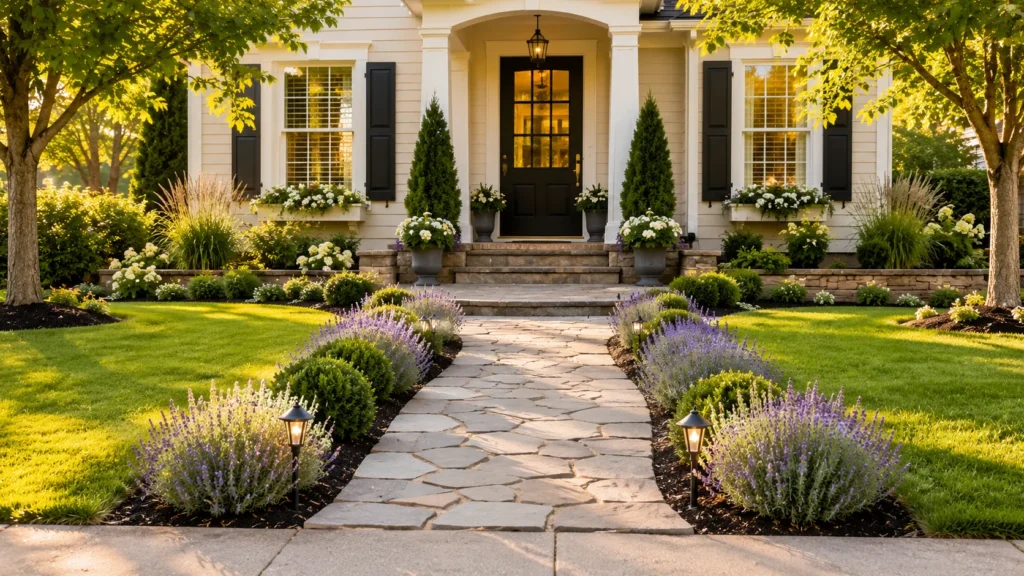
- Creates a clear and welcoming route to the door.
- Adds structure to open or uneven lawn areas.
- Connects the landscape visually with the home.
- Helps prevent muddy or worn walking tracks.
A defined stone pathway gives the front yard structure while making the route to the door feel intentional. Choose pavers, flagstone, or gravel in tones that complement the home’s exterior, then create a clear line from the driveway or sidewalk. Slight curves often feel more relaxed, while straight paths suit modern homes. Bordering the walkway with low plants or neat edging adds contrast and prevents the design from looking unfinished. Visitors immediately understand where to walk, and the yard gains a strong focal line that visually connects the landscape to the entrance.
The best pathway is attractive, comfortable, and easy to use in every season. Keep stones level, allow enough width for two people where possible, and avoid placing thorny plants too close to the edge. I’ve seen this work especially well when homeowners repeat materials already used on the porch, steps, or facade. That small connection makes the entire exterior feel coordinated. Solar lights, creeping thyme, or compact ornamental grasses can soften the sides without crowding the route, creating a welcoming approach that feels polished during both daylight and evening hours.
3- Fresh Mulch Beds
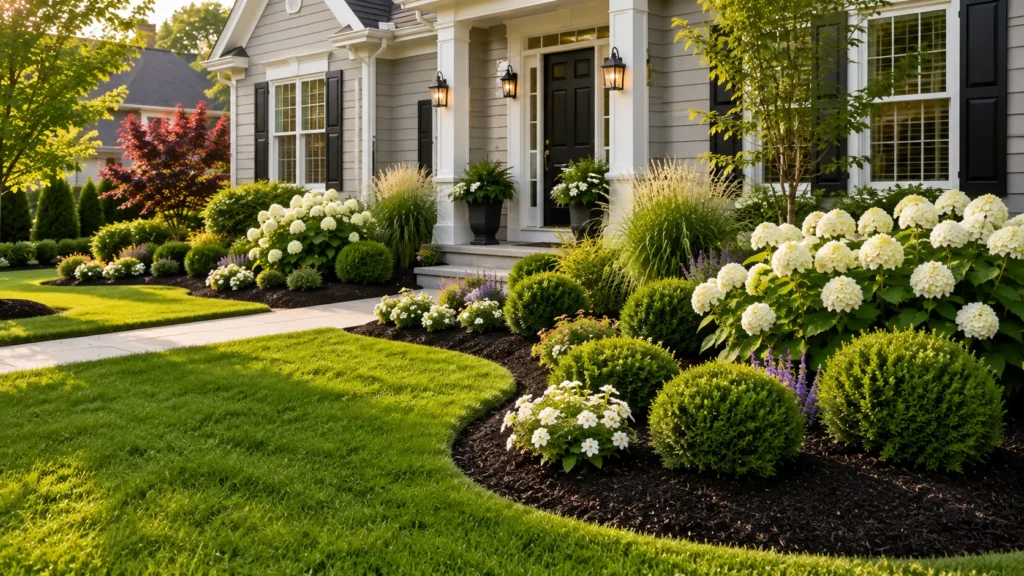
- Refreshes faded planting beds almost immediately.
- Creates stronger contrast around flowers and greenery.
- Helps control weeds and retain soil moisture.
- Gives inexpensive landscaping a clean, finished appearance.
Fresh mulch is one of the fastest ways to make tired planting beds look clean, rich, and professionally maintained. Its even color creates a strong background for flowers, shrubs, and ornamental grasses, helping every plant stand out more clearly. Dark brown mulch feels classic, while natural cedar tones bring warmth to lighter homes. Spread it in a smooth, consistent layer around existing plants, but keep it away from trunks and stems. The instant contrast between mulch, lawn, and foliage makes the front yard appear sharper, healthier, and more intentionally cared for.
This simple update also solves practical problems that are easy to overlook. Mulch helps retain soil moisture, reduces weed growth, and protects roots from sudden temperature changes. That’s why many designers recommend refreshing it before adding more decorative features. First, redefine the bed edges with a spade or metal edging, then remove visible weeds and debris. A two-to-three-inch layer is usually enough for a neat finish without smothering plants. The result is subtle but powerful: cleaner borders, richer color, and a yard that looks recently upgraded even when nothing else has changed.
4- Boxwood Borders
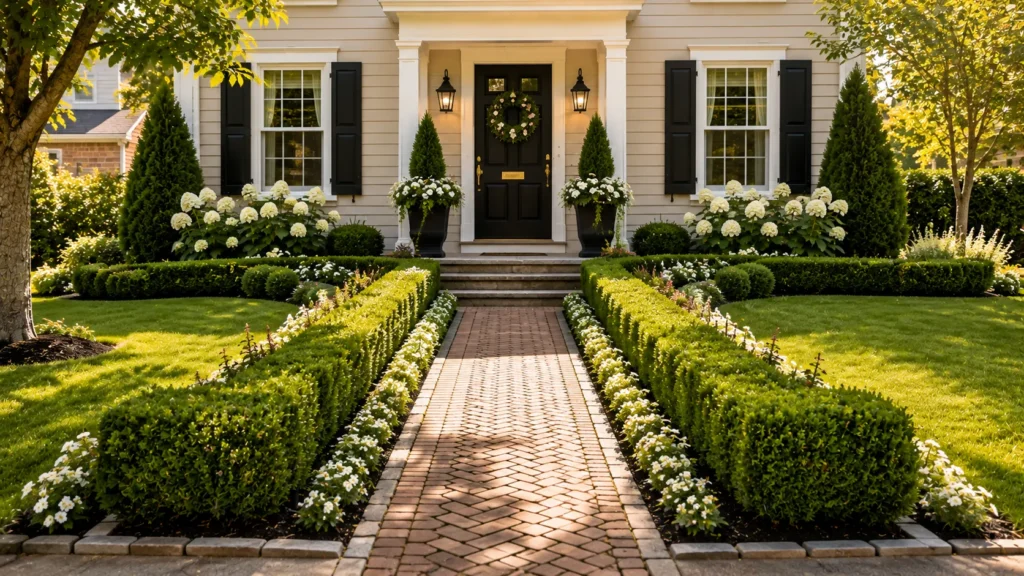
- Frames walkways with a neat, structured appearance.
- Creates year-round greenery that stays attractive.
- Makes the entrance feel more polished and organized.
- Pairs beautifully with seasonal flowers and decorative accents.
Nothing creates a crisp, finished look quite like neatly shaped boxwood borders. These evergreen shrubs naturally define pathways, planting beds, and entry areas while keeping the overall design tidy throughout the year. Their compact shape works with both traditional and modern homes, making them a versatile choice for almost any landscape. Plant them in evenly spaced rows and trim them lightly to maintain smooth lines. The consistent greenery adds visual balance, making colorful flowers, decorative pots, and architectural details stand out even more against the structured backdrop.
I’ve noticed that homeowners often underestimate how much repeating one simple plant can improve the entire yard. Instead of mixing too many shrub varieties, allow boxwoods to create rhythm and continuity from the sidewalk to the porch. Leave enough room for mature growth so trimming stays minimal over time. Pair the greenery with flowering perennials or mulch for extra contrast and depth. This combination feels refined without appearing overly formal, creating an inviting entrance that looks carefully maintained during every season of the year.
5- Decorative Planters
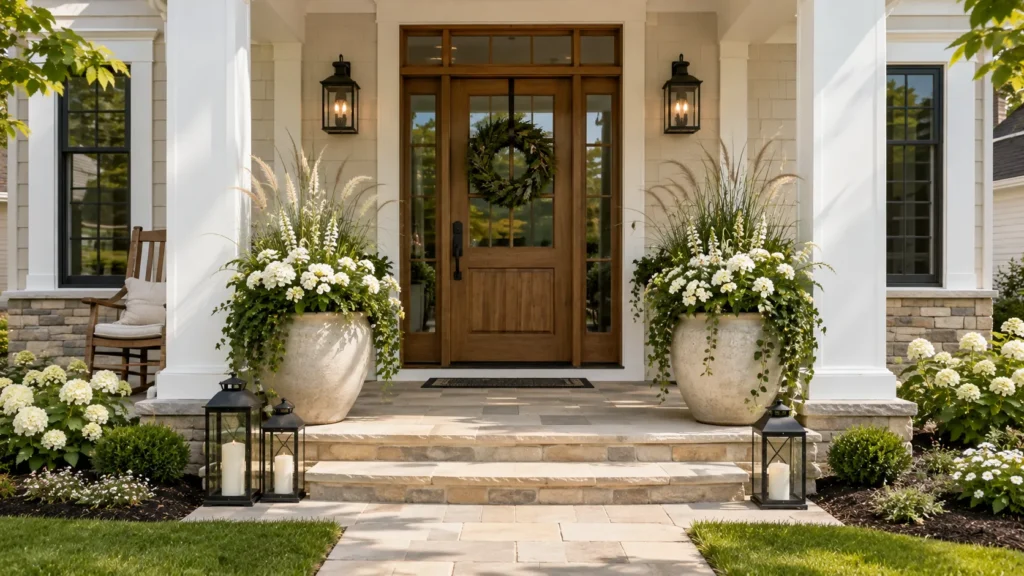
- Adds instant color without changing permanent landscaping.
- Highlights the front door with layered visual interest.
- Easy to refresh throughout different seasons.
- Perfect for small spaces that need extra personality.
Large decorative planters instantly make an entrance feel more welcoming and thoughtfully styled. Position matching containers on each side of the front door for symmetry, or group different sizes together for a softer, collected look. Fill them with colorful annuals, ornamental grasses, or evergreen plants depending on the season and your maintenance preference. The containers introduce height and texture where garden beds may be limited. Even a modest porch feels more inviting when attractive planters create a natural transition between the landscape and the home.
For the best visual impact, choose containers that complement the home’s architecture instead of competing with it. Neutral ceramic, concrete, or matte black finishes remain timeless and allow the plants to become the focal point. In my experience, mixing one upright plant, one mounding variety, and one trailing element creates the fullest arrangement with very little effort. Refreshing flowers each season keeps the entrance looking updated without redesigning the entire yard, making this one of the easiest exterior improvements homeowners can enjoy throughout the year.
6- Layered Shrub Groups
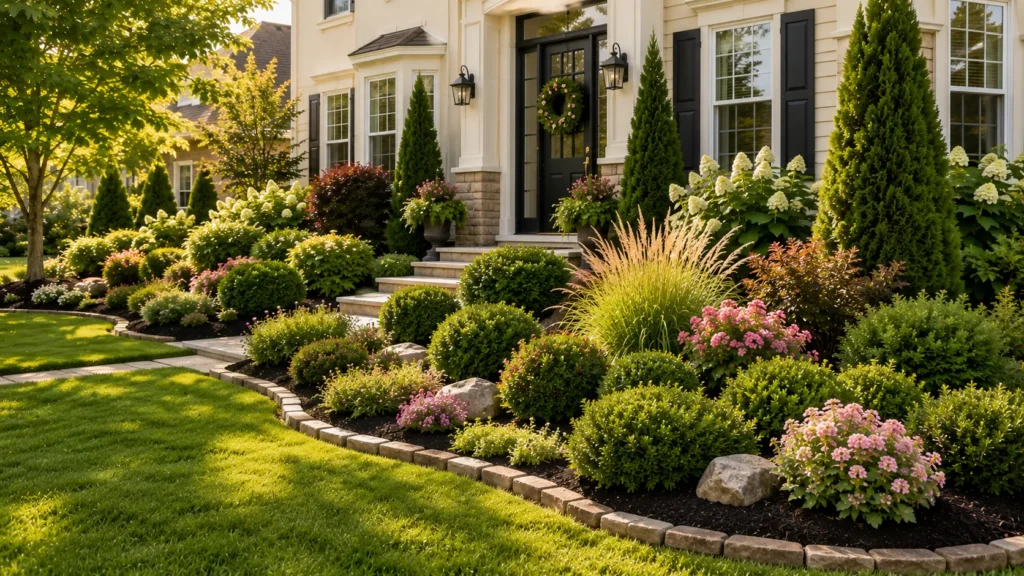
- Creates depth instead of a flat planting layout.
- Blends different heights for a natural appearance.
- Fills empty spaces without overcrowding the yard.
- Keeps the landscape attractive across multiple seasons.
Flat landscaping can make even beautiful homes feel less inviting, but layering shrubs quickly adds depth and dimension. Arrange taller evergreens toward the back, medium flowering shrubs in the middle, and lower plants near the edge for a balanced composition. This gradual change in height creates movement while allowing every plant to remain visible. Repeating similar colors and textures throughout the bed keeps everything cohesive instead of cluttered. The landscape immediately feels fuller, more established, and visually connected from every viewing angle around the property.
That’s why many designers recommend thinking in layers instead of individual plants. Before buying anything, stand across the street and imagine how each shrub will look once fully grown. I’ve seen this work well in many homes because proper spacing prevents overcrowding while preserving the layered effect for years. Incorporating evergreen varieties alongside seasonal blooms ensures the landscape remains attractive even during colder months. These thoughtful planting combinations provide lasting beauty with surprisingly manageable maintenance and help boost curb appeal without constant updates.
7- Solar Path Lights
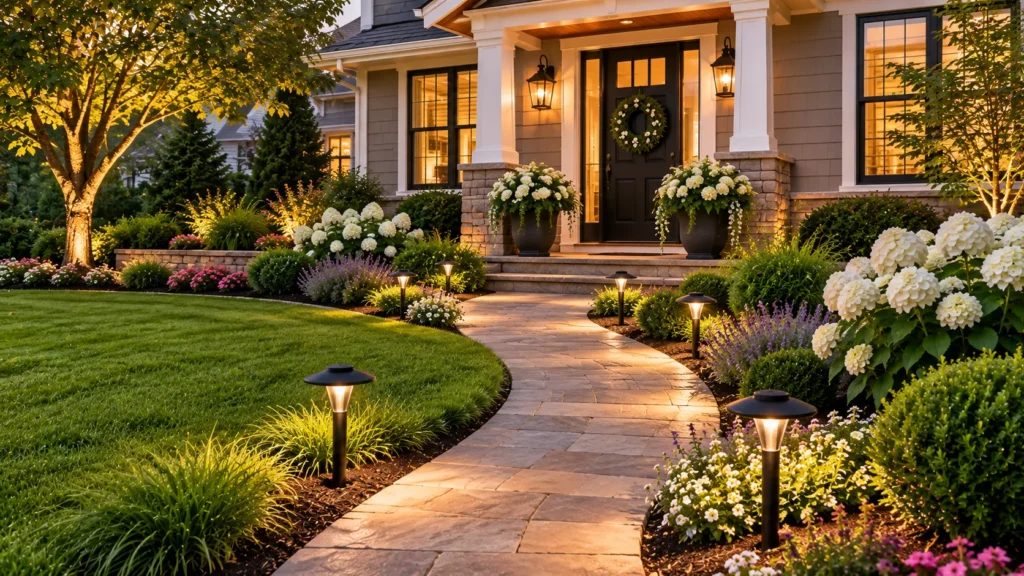
- Makes walkways safer after sunset.
- Highlights landscaping without expensive wiring.
- Creates a warm and welcoming evening atmosphere.
- Adds depth and definition to the yard at night.
As the sun sets, well-placed solar path lights completely change how a front yard feels. Instead of disappearing into darkness, walkways, flower beds, and entry paths become softly illuminated with a warm, welcoming glow. Modern solar fixtures require no electrical wiring, making installation quick for most homeowners. Position them evenly along pathways or tuck them beside planting beds to highlight texture and shape. The gentle lighting creates depth without overpowering the landscape, helping every evening arrival feel more inviting while also improving visibility for guests and family members.
Good lighting works best when it feels subtle rather than overly bright. Space fixtures evenly instead of clustering them together, and choose warm white bulbs that complement natural landscaping. I’ve noticed that lower-profile lights often look more elegant because they blend into the garden during daylight hours. Clean the solar panels occasionally so they charge efficiently and provide consistent illumination throughout the evening. This affordable improvement extends the beauty of your landscaping beyond daylight while making the entrance appear thoughtfully designed every single night of the year.
8- Decorative Rock Accents
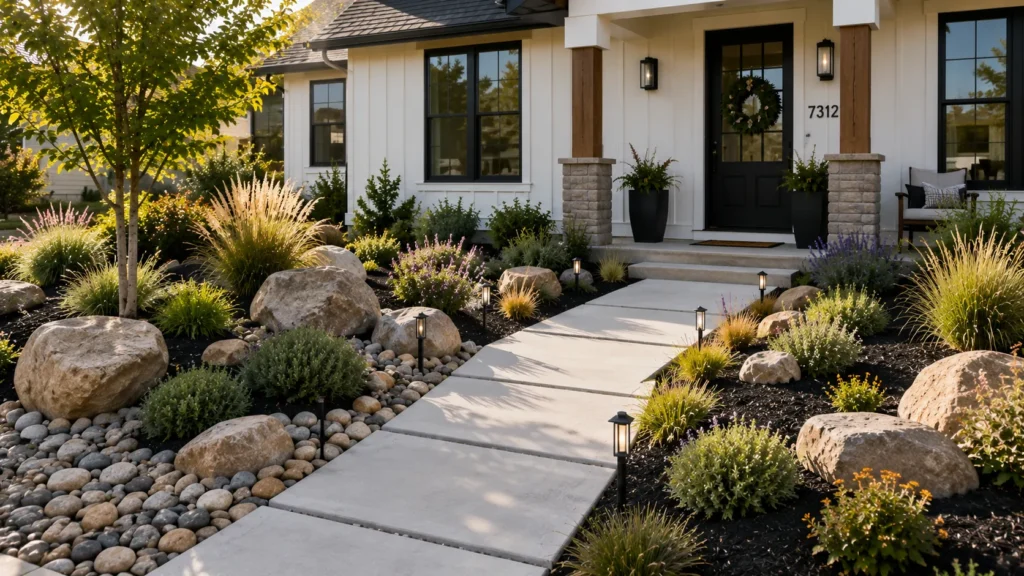
- Introduces texture without adding maintenance.
- Breaks up large planting beds naturally.
- Complements both modern and rustic homes.
- Helps reduce exposed soil around plants.
Decorative rocks add lasting texture that keeps planting beds interesting throughout every season. Smooth river stones create a softer appearance, while larger natural boulders become eye-catching focal points among shrubs and ornamental grasses. Mixing different sizes creates a landscape that feels organic instead of overly planned. Use rocks to separate planting areas, highlight specimen plants, or soften empty corners that need visual weight. Their natural tones pair beautifully with greenery, helping the entire yard feel balanced, grounded, and professionally arranged without overwhelming the surrounding landscape.
The key is using rocks as accents instead of filling every empty space. Too many stones can make the landscape feel harsh, while a few carefully placed pieces create effortless contrast. In my experience, combining decorative rocks with mulch produces the most natural appearance because both materials complement each other. Select colors that echo your home’s exterior stone, brick, or trim for a cohesive design. Once installed, the rocks require very little maintenance, making them an excellent long-term feature for busy homeowners seeking attractive outdoor improvements.
9- Window Flower Boxes
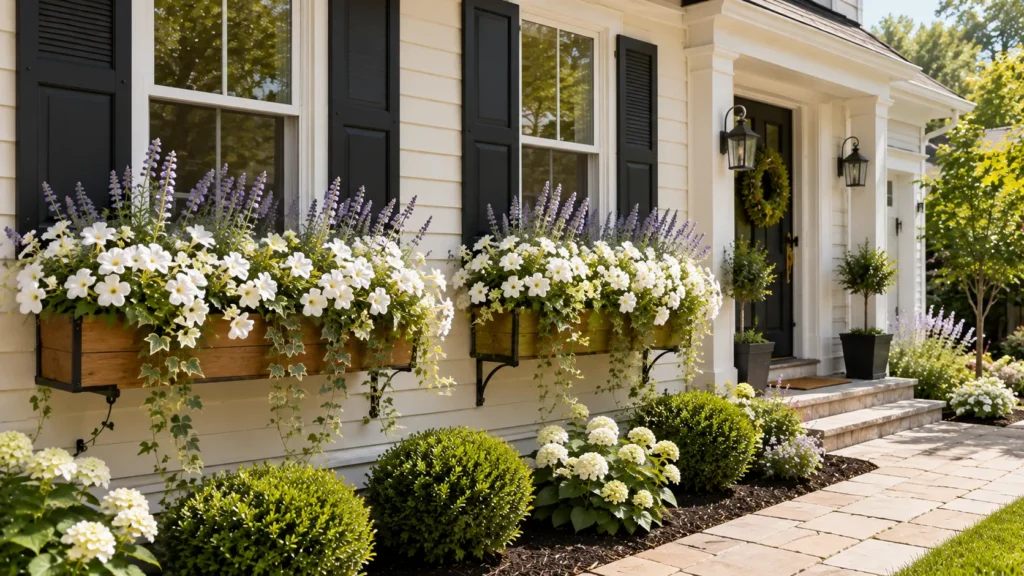
- Adds colorful charm above ground level.
- Makes the home’s exterior feel more welcoming.
- Brings balance to plain windows and facades.
- Easily updated with seasonal flowers and greenery.
Window flower boxes bring vibrant color closer to eye level, making the entire front of the home feel warmer and more inviting. Whether attached beneath one window or repeated across the facade, they create visual balance while showcasing seasonal flowers and trailing greenery. Choose blooms that complement the home’s exterior colors, then layer upright, mounding, and cascading plants for a full display. Even simple homes gain extra character from this classic detail, giving the exterior a carefully styled appearance without requiring major landscaping changes around the yard.
I’ve seen this work especially well when homeowners coordinate flower box colors with nearby garden beds instead of matching them exactly. Similar shades create harmony while allowing each planting area to stand on its own. Be sure the boxes have proper drainage and are securely mounted before planting. Watering becomes easier when lightweight potting mix is used instead of heavy garden soil. Small updates like these prove that thoughtful details often create a stronger impression than expensive renovations, especially when viewed from the street throughout the growing season.
10- Ornamental Grass Clusters
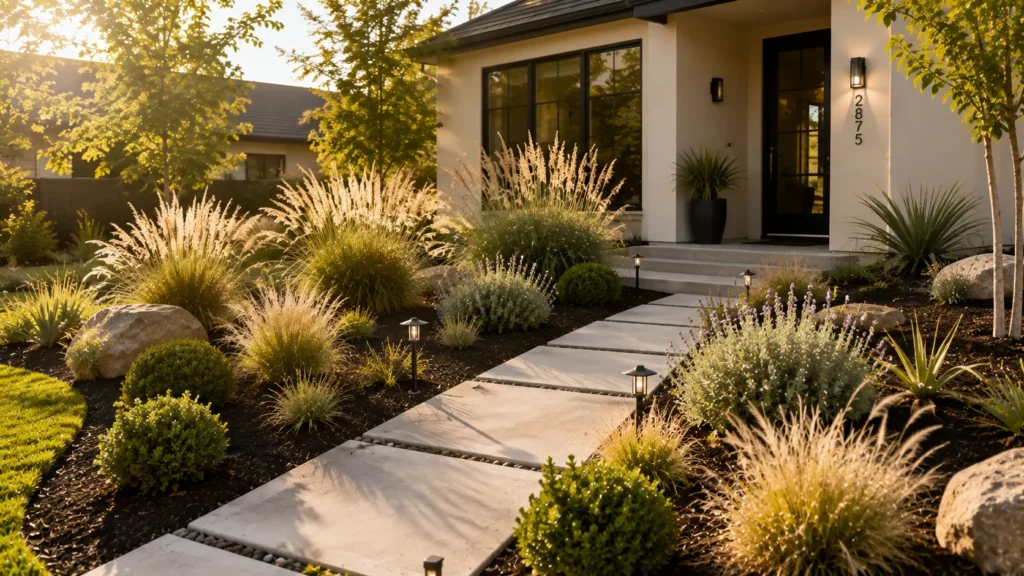
- Adds graceful movement with every breeze.
- Softens hard edges around walkways and driveways.
- Provides texture even when flowers are not blooming.
- Works beautifully in both modern and traditional landscapes.
A few well-placed ornamental grasses can completely change how a front yard feels by introducing softness and natural movement. Their flowing texture contrasts beautifully with solid walkways, stone borders, and neatly trimmed shrubs. Choose varieties that match the scale of your home, then plant them in small repeating clusters rather than scattering individual plants throughout the landscape. As they sway in the breeze, they create an effortless, layered appearance that feels both modern and timeless. The changing texture also keeps the yard visually interesting long after flowering plants have faded.
Many grasses remain attractive well into autumn and winter, giving the landscape year-round character with very little maintenance. I’ve noticed that repeating the same variety throughout the yard creates a cleaner, more intentional look than mixing several different types. Trim them back once new spring growth begins, allowing fresh foliage to replace older stems naturally. Their drought tolerance also makes them an excellent choice for homeowners looking to reduce watering while maintaining a landscape that feels lush, balanced, and full of life throughout changing seasons.
11- Brick Walkway Edging
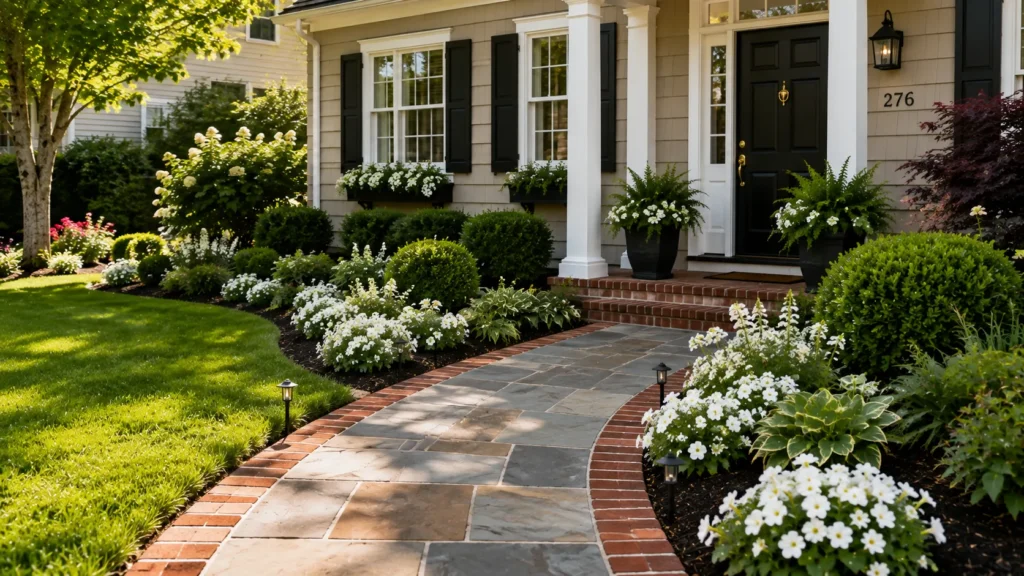
- Defines pathways with a clean finished border.
- Prevents grass from spreading into walkways.
- Adds timeless character and architectural charm.
- Creates a more organized overall landscape layout.
Brick edging may seem like a small detail, but it gives planting beds and pathways a polished appearance that instantly elevates the landscape. The clean border separates grass from mulch while adding warmth through natural texture and color. Traditional red brick offers timeless appeal, while weathered or reclaimed styles create a softer, established look. Install the bricks flush with the ground or slightly raised depending on the desired effect. Either approach provides a crisp outline that helps every other landscaping feature appear more intentional and carefully maintained.
The beauty of brick edging is that it combines style with practical function. It keeps mulch contained, reduces lawn creep, and makes routine trimming much easier throughout the growing season. That’s why many designers recommend defining bed edges before investing in larger landscape upgrades. Consistent edging creates visual order that makes even simple planting beds feel professionally designed. Over time, the durable material weathers beautifully, blending naturally into the garden while continuing to provide structure, balance, and lasting curb appeal with minimal upkeep.
12- Statement Entry Tree
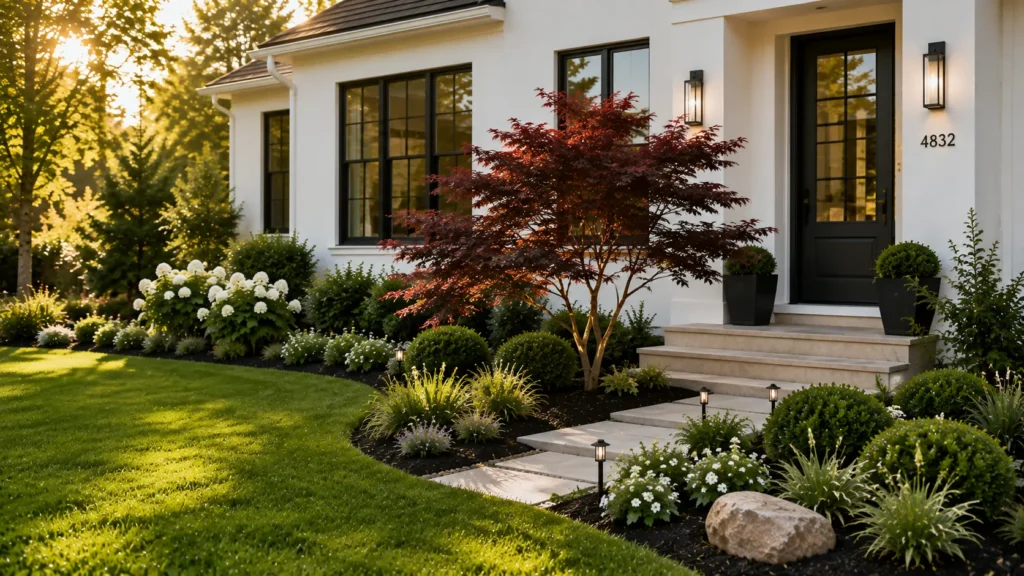
- Creates a beautiful focal point near the entrance.
- Adds height without overwhelming the landscape.
- Brings seasonal color and visual interest.
- Makes the home feel more established over time.
One carefully chosen ornamental tree can become the signature feature of an entire front yard. Position it where it naturally frames the entrance or balances the architecture without blocking windows or pathways. Japanese maple, dogwood, or flowering crabapple are popular options because they provide seasonal color while remaining appropriately scaled for residential landscapes. Their graceful branches introduce height and elegance, making surrounding shrubs and flowers feel more connected. Even a modest property gains greater depth when a striking tree anchors the overall design with natural beauty.
Before planting, consider the tree’s mature size rather than its appearance at the nursery. I’ve seen this work well in many homes because thoughtful placement prevents future crowding while preserving open views of the house. Leave enough room for roots and canopy growth, then surround the base with mulch and low-growing plants instead of grass. This creates a clean, finished look while reducing maintenance. A healthy ornamental tree continues improving curb appeal year after year, making it one of the most rewarding long-term landscaping investments.
13- Symmetrical Porch Greenery
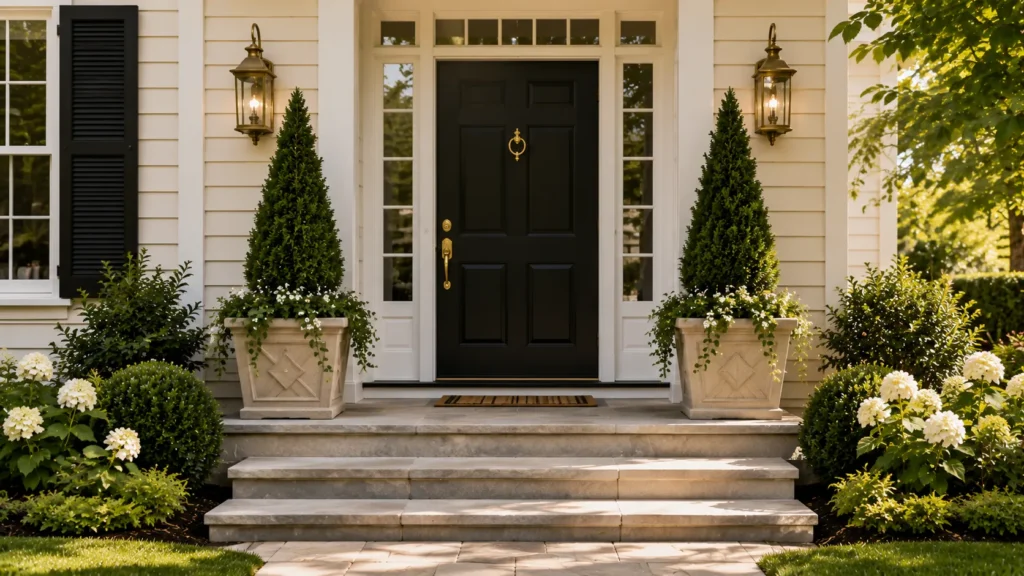
- Creates a balanced and welcoming entrance.
- Makes the front door feel like a natural focal point.
- Works beautifully in every season with evergreen plants.
- Gives the exterior a polished designer-inspired finish.
A symmetrical porch arrangement instantly creates a sense of order and elegance that welcomes visitors before they even reach the front door. Place matching evergreen planters, lanterns, or decorative containers on each side of the entrance to frame the space naturally. This balanced layout complements nearly every architectural style, from traditional cottages to modern homes. Even when the rest of the landscape is simple, the repeated elements draw attention toward the entry and make the entire exterior feel more intentional, refined, and inviting without requiring a large investment.
The secret to making symmetry look effortless is choosing pieces that share the same height, color, and visual weight. I’ve noticed that evergreen shrubs work especially well because they provide structure throughout every season without constant replacement. If you enjoy seasonal decorating, simply swap flowers or decorative accents while keeping the main containers in place. This approach saves time and maintains consistency year after year. Small details like coordinated lighting or matching doormats further strengthen the balanced appearance and complete the welcoming first impression.
14- Mixed Seasonal Flowers
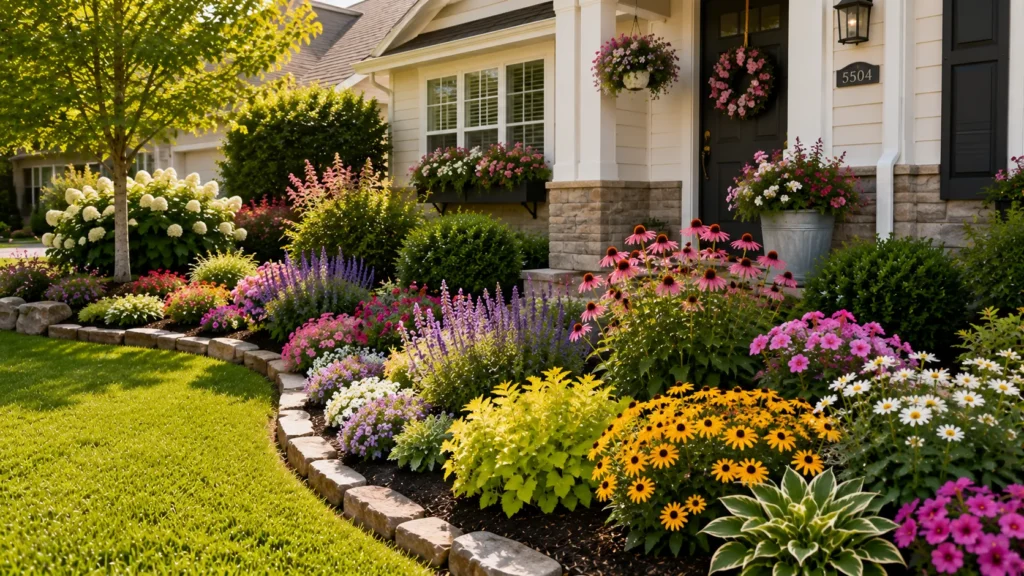
- Keeps the landscape colorful throughout the year.
- Creates changing visual interest with every season.
- Attracts butterflies and other helpful pollinators.
- Makes planting beds feel lively and full.
Color has an incredible way of transforming an ordinary front yard into one that immediately catches attention from the street. Instead of relying on a single bloom period, combine plants that flower during different seasons so something attractive is always on display. Blend annuals for vibrant color with dependable perennials that return each year. Repeating similar shades across multiple beds creates harmony while preventing the landscape from feeling random. The changing display keeps the exterior looking fresh and encourages visitors to notice new details throughout the year.
Planning ahead makes seasonal planting much easier than replacing everything at once. That’s why many designers recommend choosing a simple color palette first, then selecting flowers that bloom at different times within those tones. In my experience, limiting the palette to three or four complementary colors creates a more sophisticated appearance than using every available shade. Healthy soil, regular watering, and occasional deadheading help flowers perform at their best, rewarding homeowners with vibrant curb appeal that evolves beautifully through every season.
15- Modern House Numbers
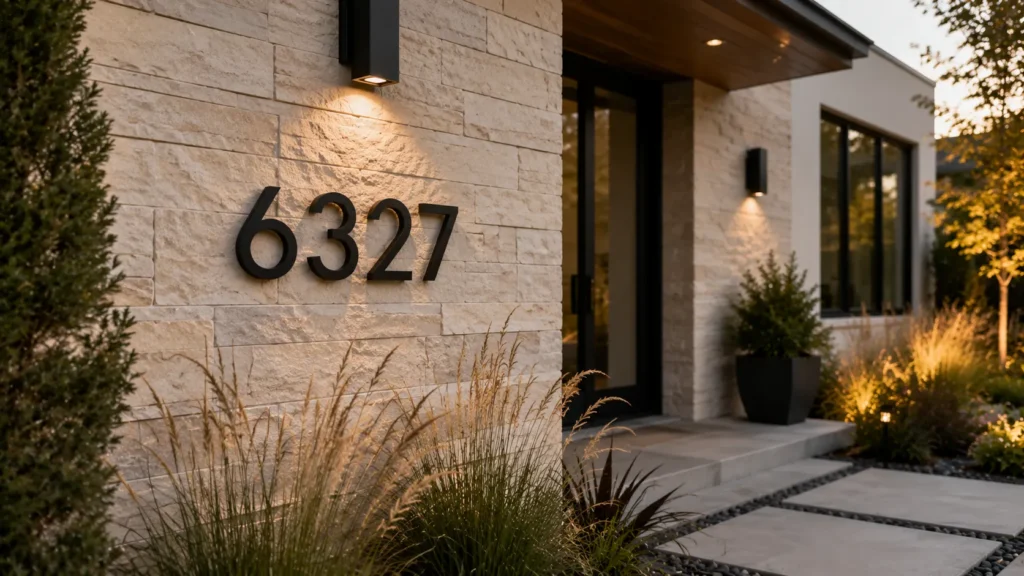
- Gives the home’s exterior a modern finished look.
- Improves visibility for guests and deliveries.
- Adds personality without major renovations.
- Complements updated lighting and entry details.
Modern house numbers may seem like a small finishing touch, but they often become one of the first details visitors notice. Oversized metal numbers in black, brushed nickel, or bronze instantly modernize the entrance while making the address easier to read from the street. Mount them on stone, wood, brick, or a contrasting wall surface for maximum visibility. Pairing updated numbers with attractive lighting creates a coordinated entrance that feels clean and current. Simple upgrades like this can quietly elevate the overall appearance without changing the landscape itself.
When planning Front Yard Landscaping Ideas, it’s easy to focus only on plants, but architectural details deserve equal attention. I’ve seen this work especially well when homeowners coordinate house numbers with mailbox hardware, light fixtures, or door handles for a unified exterior style. Be sure to install the numbers at an easily visible height and leave enough contrast between the background and finish. This inexpensive improvement enhances both function and design, giving the home a polished first impression that lasts throughout every season.
Conclusion
Beautiful curb appeal doesn’t have to come from expensive renovations or professional landscaping. With the right Front Yard Landscaping Ideas, a series of thoughtful, affordable updates can completely refresh the way your home looks and feels. I’ve seen how small improvements like fresh mulch, layered greenery, better lighting, and decorative accents can create an impressive transformation over time. Save this guide on Pinterest so you can revisit your favorite ideas whenever you’re ready to start. Try one project at a time, share this article with someone planning an exterior makeover, and enjoy creating a front yard you’ll be proud to come home to.