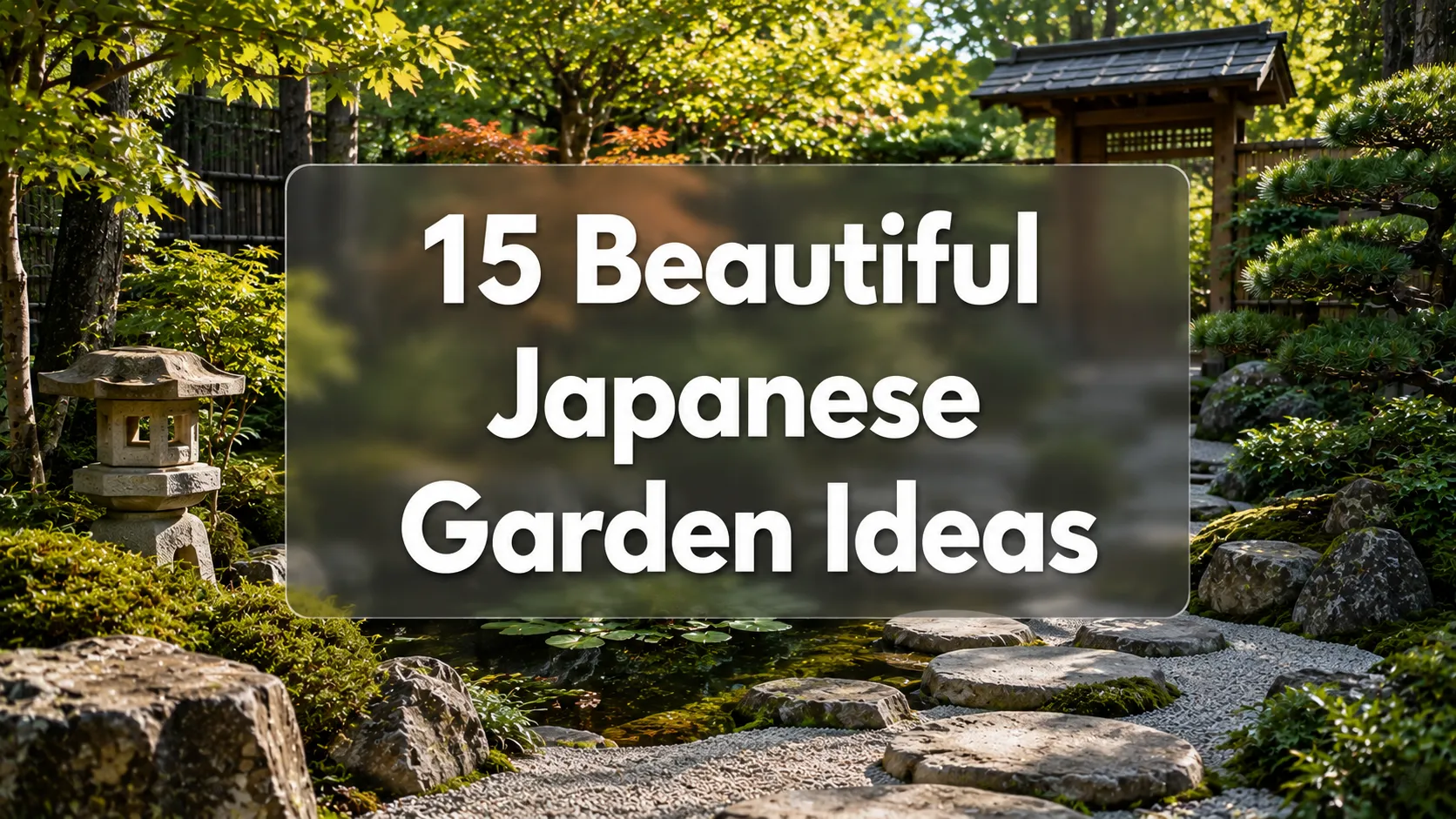
15 Beautiful Japanese Garden Ideas For A Calm Outdoor Space
Imagine stepping outside and instantly feeling your shoulders relax. A peaceful garden doesn’t have to be large or expensive—it simply needs thoughtful design that encourages you to slow down.
These Japanese Garden Ideas will help you transform an ordinary outdoor space into a calm, balanced retreat filled with natural beauty and timeless charm. Whether you have a compact courtyard, a suburban backyard, or a quiet side garden, the ideas in this collection are designed to inspire practical changes that feel achievable and rewarding.
You’ll discover elegant pathways, soothing water features, sculptural stones, graceful trees, and minimalist layouts that work beautifully in real homes. Each idea focuses on creating harmony through texture, natural materials, and intentional placement rather than filling every corner with decoration. That makes these designs both visually striking on Pinterest and genuinely useful for everyday living.
In my experience, the most relaxing gardens aren’t always the largest—they’re the ones where every element feels purposeful. I’ve noticed that even adding a simple stone path, a mossy corner, or a quiet seating nook can completely change how an outdoor space feels. Small, thoughtful improvements often create the biggest emotional impact. As you explore these ideas, you’ll find inspiration that is not only beautiful to look at but also practical enough to bring into your own garden with confidence.
1- Mossy Stone Path

- Creates a natural route through the garden.
- Makes a small outdoor space feel deeper.
- Soft moss adds color without looking busy.
- Curved placement feels more relaxed than straight paving.
- A lantern or bench gives the pathway a clear destination.
Among practical Japanese Garden Ideas, a stone pathway instantly creates direction and quiet rhythm beautifully. Use irregular stepping stones with soft edges, leaving small gaps for moss, gravel, or low groundcover to grow between them. This creates a natural, aged look instead of a rigid walkway. In real gardens, the slight spacing also slows people down, which makes the space feel more peaceful and thoughtfully composed. Keep the route gently curved rather than perfectly straight, and guide it toward one focal point such as a bench, lantern, or water feature.
This idea works especially well in small yards because it organizes the space without adding bulky structures. I’ve noticed that even a short path can make a plain corner feel intentional and carefully designed. Choose stones in muted gray, charcoal, or warm taupe so they blend with plants and gravel. Avoid placing every stone at the same angle, since variation feels more natural and visually relaxed. The finished effect is subtle but powerful: the garden appears deeper, movement feels calmer, and each step becomes part of the overall outdoor experience.
2- Raked Gravel Court

- Gives bare or difficult ground a polished purpose.
- Raked patterns add movement without extra decoration.
- Requires less watering than a planted lawn.
- Statement rocks create structure and visual balance.
- Simple edging keeps loose gravel neat and contained.
A simple gravel courtyard can turn an overlooked patch of yard into a calm, structured retreat. Use pale gray or warm beige gravel as the base, then add a few larger rocks in an asymmetrical arrangement. The contrast between fine gravel and solid stone creates instant visual balance without requiring many plants. Raked lines can introduce gentle movement, while open space keeps the area from feeling crowded. This setup is especially useful where grass struggles to grow, giving difficult corners a clean, intentional finish that still feels natural and quietly refined.
The beauty of this layout comes from restraint, so every element should earn its place. That’s why many designers recommend using three to five statement rocks rather than filling the area with decoration. Edge the gravel with timber, dark stone, or low evergreen plants to keep it contained and polished. In my experience, a narrow wooden bench or a single lantern is enough to make the space feel complete. The result is low-maintenance, visually soothing, and ideal for homeowners who want a serene garden without constant trimming, watering, or seasonal replanting.
3- Stone Water Basin
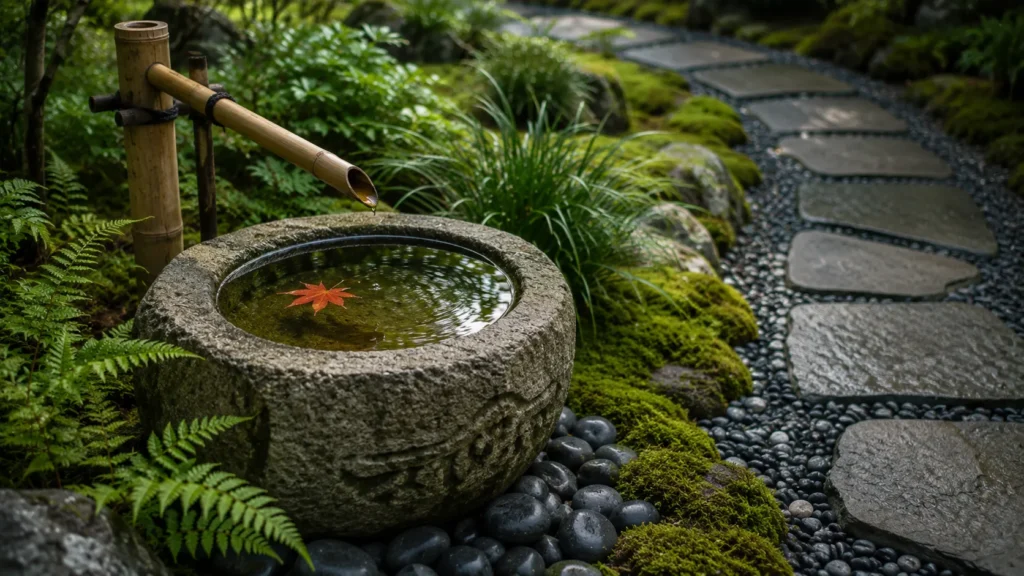
- Adds the calming presence of water without a pond.
- Reflects surrounding greenery and natural light.
- Fits neatly beside paths, patios, or shaded corners.
- Softens hard paving and heavy stone surfaces.
- Ferns and moss help the feature look naturally established.
A small water basin creates an immediate focal point while bringing softness to stone, gravel, and greenery. Choose a carved stone bowl or simple ceramic vessel, then position it beside a path or beneath a leafy tree. Fill it with clean water and add one floating leaf, smooth pebble, or bamboo spout for detail. The reflective surface catches sky and foliage, making even a compact garden feel more layered. Because the feature stays low to the ground, it adds atmosphere without blocking views or overwhelming the surrounding planting nearby visually.
This feature is practical for small spaces because it delivers the calming look of water without needing a full pond. I’ve seen this work well near patios, where the basin can soften hard paving and create a quiet transition into the garden. Place ferns, moss, or shade-loving plants around the base to help it feel established. Regularly refresh the water and keep fallen leaves cleared for a crisp appearance. The final effect is elegant and meditative, adding gentle reflection, natural texture, and a refined sense of balance to the outdoor space.
4- Bamboo Privacy Screen

- Creates privacy without feeling heavy or enclosed.
- Adds natural texture to fences or blank walls.
- Filters sunlight into soft, calming shadows.
- Pairs beautifully with stone, gravel, and greenery.
- Works well in both compact and spacious gardens.
A bamboo screen instantly softens harsh fences while creating a peaceful sense of enclosure. Instead of relying on solid walls, vertical bamboo allows light and airflow to pass through, making the garden feel open rather than confined. Pair it with ornamental grasses, evergreen shrubs, or smooth river stones to enhance its natural character. The warm bamboo tones blend effortlessly with greenery, helping every corner feel more inviting. This approach works especially well for patios or side yards where extra privacy is needed without sacrificing brightness or visual appeal.
Thoughtful layering makes this feature look intentional instead of temporary. I’ve noticed that placing taller plants slightly in front of the bamboo creates depth while hiding the base for a cleaner finish. Choose untreated bamboo with subtle color variation so the screen ages gracefully over time. Add a simple wooden bench or stone lantern nearby to complete the setting without overcrowding the area. The finished space feels sheltered, balanced, and naturally elegant while remaining easy to maintain throughout the changing seasons.
5- Maple Tree Corner
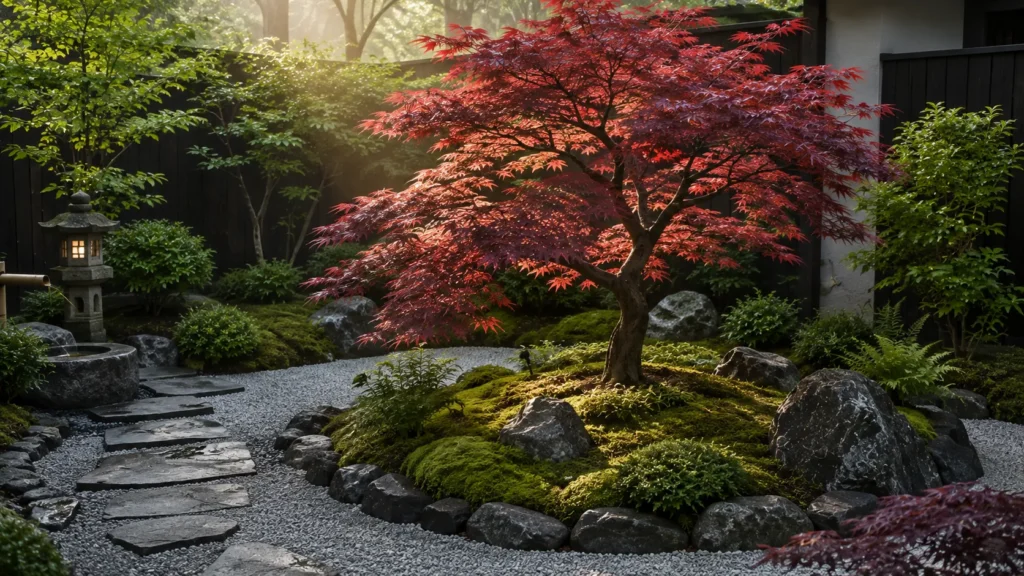
- Adds a striking seasonal focal point.
- Brings vibrant color without many decorative elements.
- Makes empty corners feel thoughtfully designed.
- Looks beautiful with rocks and moss below.
- Provides gentle shade for nearby seating.
Nothing captures the changing seasons quite like a graceful Japanese maple placed in the right location. Position it where the branching shape can be admired from several angles, allowing surrounding plants to remain lower for balance. Moss, gravel, and carefully placed stones naturally highlight the tree without competing for attention. As the foliage shifts from fresh spring greens to brilliant autumn reds, the entire landscape feels refreshed. This simple arrangement transforms an overlooked corner into a memorable destination that draws the eye throughout the year.
Choosing the right scale is just as important as selecting the tree itself. That’s why many designers recommend dwarf or compact varieties for smaller gardens where every element matters. In my experience, allowing open space around the trunk makes the elegant branching structure stand out even more. Avoid crowding the area with colorful flowers, since subtle textures keep the composition calm. Over time, the maple becomes the heart of the landscape, providing beauty, shade, and an ever-changing display that rewards every season.
6- Wooden Garden Bridge
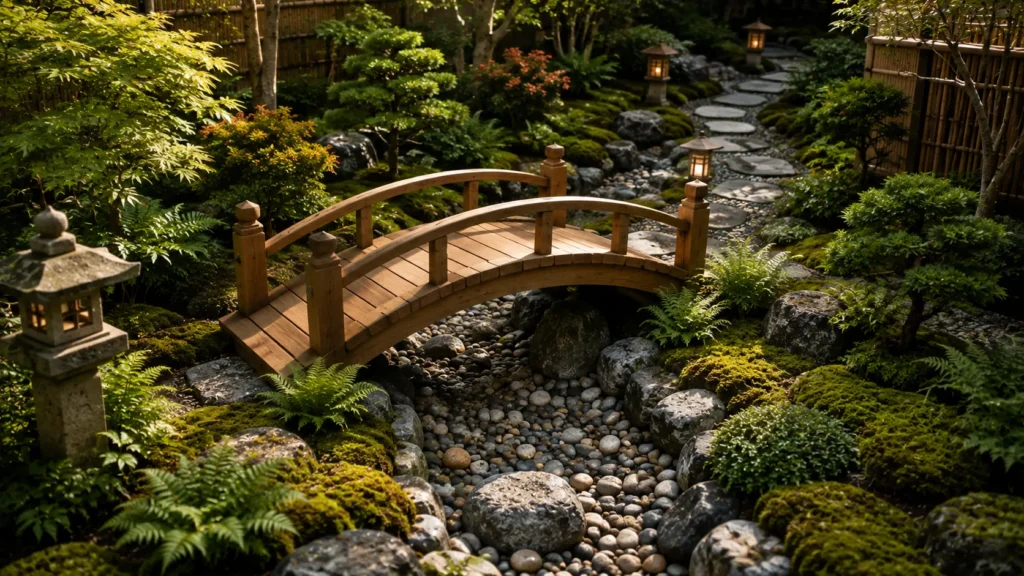
- Creates an eye-catching architectural feature.
- Connects different areas of the landscape naturally.
- Adds height and visual movement.
- Enhances both dry creek beds and water features.
- Gives the garden a timeless handcrafted look.
A wooden bridge introduces graceful movement while naturally guiding visitors through the landscape. Even without a flowing stream, placing it across a dry riverbed filled with smooth stones creates the illusion of crossing water. The gentle curve adds softness against gravel, pathways, and planting beds, making the entire garden feel more dynamic. Cedar or cypress wood develops beautiful character over time, blending effortlessly with natural surroundings. This feature works particularly well as a transition between separate garden zones while maintaining a peaceful and cohesive overall design.
The surrounding details make the bridge feel truly authentic rather than decorative. I’ve seen this work well when moss, ferns, and low evergreens are planted around both ends, helping it settle naturally into the landscape. Keep railings simple and avoid excessive ornamentation so the craftsmanship remains the focus. A nearby lantern or stone basin completes the composition without creating visual clutter. The result is an elegant centerpiece that invites slow walks, encourages quiet moments, and adds timeless charm to gardens of nearly every size.
7- Layered Rock Arrangement
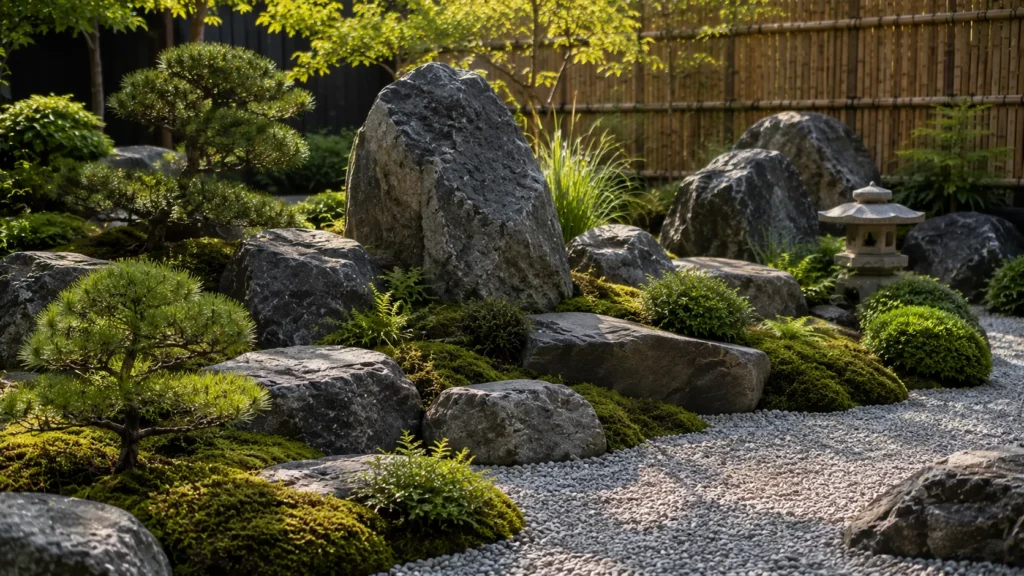
- Adds structure that lasts through every season.
- Creates natural elevation in flat landscapes.
- Makes planting beds look more established.
- Highlights texture without adding clutter.
- Blends beautifully with moss and evergreen plants.
Strong stone groupings instantly make a garden feel grounded and timeless. Instead of scattering rocks randomly, cluster different sizes together so they appear naturally settled into the landscape. Partially bury the largest stones to create the impression that they have always belonged there. Smaller rocks can frame planting pockets filled with moss or ornamental grasses, adding softness around the edges. This thoughtful arrangement creates visual stability while encouraging the eye to move gently across the space, making even modest gardens feel more mature and carefully designed.
The secret to a convincing composition is avoiding perfect symmetry. In my experience, slightly uneven spacing creates a much more authentic appearance than lining stones up evenly. Mix rounded and angular shapes while keeping the overall color palette consistent with the surrounding gravel and planting. Allow empty space between groups so every rock has room to stand out naturally. Over time, weathering, moss, and seasonal growth make the arrangement even more beautiful, creating an outdoor setting that feels peaceful, balanced, and wonderfully connected to nature.
8- Tea House Nook
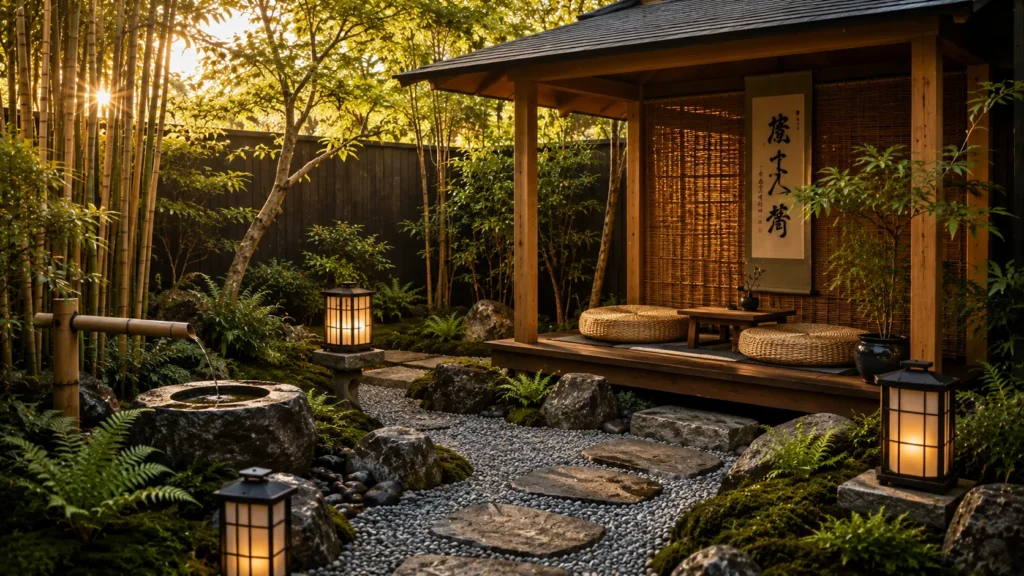
- Creates a peaceful place to relax outdoors.
- Gives the garden a meaningful destination.
- Works in both large and compact backyards.
- Natural wood keeps the space warm and inviting.
- Encourages slow moments away from daily distractions.
A quiet seating nook transforms a beautiful landscape into a space people actually enjoy using. A compact wooden pavilion, pergola, or covered corner creates shelter while maintaining the open feeling that defines Japanese-inspired gardens. Furnish it with a simple bench, neutral cushions, and a small wooden table rather than oversized outdoor furniture. The restrained styling keeps attention on the surrounding greenery while offering a comfortable place to unwind. Even a modest corner becomes more welcoming when it feels intentionally designed for peaceful daily moments.
That’s why many designers recommend treating seating as part of the landscape rather than a separate patio. I’ve noticed that placing the nook where it overlooks a focal point, such as a maple tree or stone arrangement, creates a stronger visual connection. Surround the structure with soft planting instead of tall barriers so every view feels natural. Keep decorations minimal and allow quality materials to stand out on their own. The result is a timeless retreat that feels relaxing from the moment you step inside.
9- Dry Creek Bed

- Solves awkward empty spaces naturally.
- Adds flowing movement without installing water.
- Improves visual balance across the landscape.
- Looks beautiful in every season.
- Pairs easily with bridges, rocks, and low planting.
A dry creek bed introduces graceful movement while requiring very little maintenance. Shape the feature with gentle curves instead of straight lines, then layer smooth river stones in different sizes to imitate the look of flowing water. Larger boulders along the edges provide stability, while ornamental grasses and moss soften the transition into nearby planting beds. This simple design naturally guides the eye through the landscape, making flat gardens appear more dynamic and thoughtfully organized without the expense of pumps or ponds.
Among versatile Japanese Garden Ideas, a dry creek bed offers beauty with impressive practicality. I’ve seen this work especially well in areas where drainage needs improvement because the stone channel can also direct rainwater naturally. Keep the surrounding plants simple so the flowing shape remains the visual highlight. A nearby wooden bridge or stone lantern strengthens the composition without making it feel crowded. The finished landscape feels calm, balanced, and effortlessly connected, delivering year-round interest with minimal upkeep.
10- Stone Lantern Display
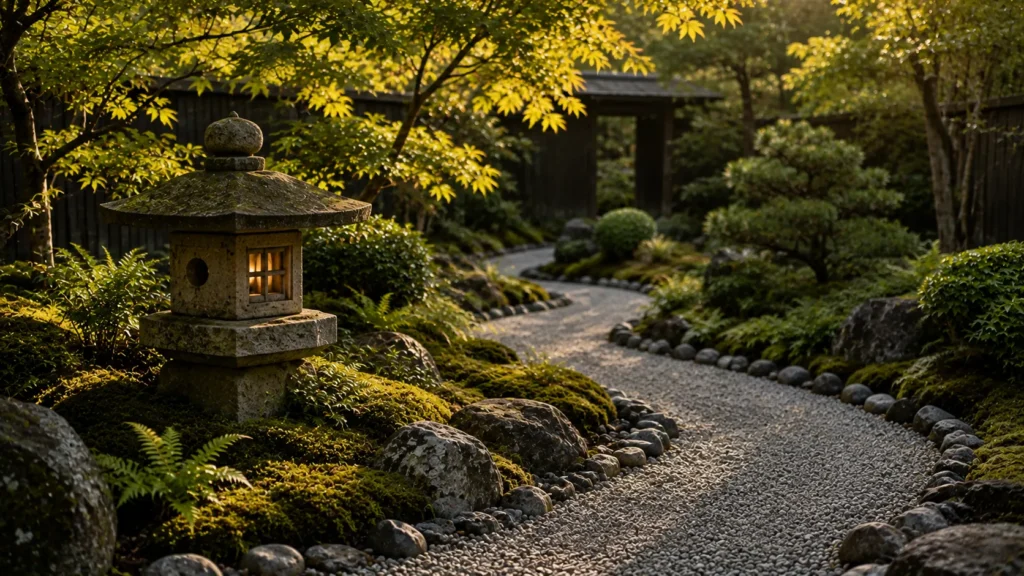
- Creates a timeless focal point without overwhelming the garden.
- Adds character throughout every season.
- Looks especially beautiful near pathways and water features.
- Blends naturally with stone, gravel, and greenery.
- Brings subtle structure to minimalist landscapes.
A carefully placed stone lantern gives the garden an unmistakable sense of tradition and balance. Position it where visitors naturally pause, such as beside a pathway, near a seating area, or close to a water feature. The lantern should complement the surrounding landscape rather than dominate it, allowing plants and natural textures to remain the main attraction. Weathered stone develops even more charm over time, creating an established appearance that feels authentic. This simple feature quietly anchors the landscape while encouraging slower movement through the outdoor space.
The surrounding planting plays an important role in making the lantern feel naturally integrated. I’ve noticed that low moss, ferns, and compact evergreen shrubs soften the base beautifully without hiding the craftsmanship. Avoid placing multiple lanterns too close together, since one well-positioned piece creates greater visual impact. Natural stone colors blend effortlessly into the environment while remaining noticeable throughout every season. The finished arrangement feels peaceful, elegant, and thoughtfully composed, adding quiet beauty that never competes with the rest of the landscape.
11- Koi Pond Retreat
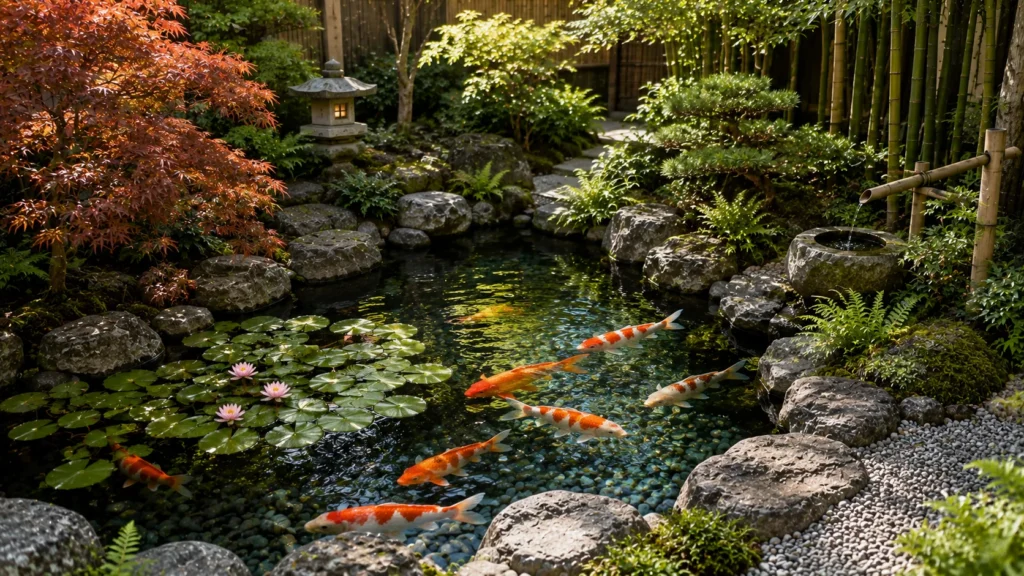
- Introduces movement and reflection into the landscape.
- Creates a peaceful destination for relaxation.
- Supports a balanced mix of stone and greenery.
- Encourages wildlife around the garden.
- Makes the entire outdoor space feel more luxurious.
Nothing transforms a peaceful landscape quite like a thoughtfully designed koi pond. Clear water reflects nearby trees, soft clouds, and surrounding stones, adding depth that changes throughout the day. Natural stone edging keeps the feature connected to the rest of the garden, while water lilies and carefully chosen aquatic plants introduce gentle texture. The graceful movement of koi fish brings life without creating visual clutter. Together, these elements form a calming retreat where every visit feels slightly different as light and reflections continue to change.
A successful pond depends more on simplicity than on adding countless decorative pieces. That’s why many designers recommend keeping surrounding planting restrained so the water remains the main attraction. In my experience, placing a nearby bench encourages people to slow down and appreciate the gentle movement of the fish. Regular maintenance keeps the water clear while preserving healthy conditions for aquatic life. The result is an elegant outdoor centerpiece that combines beauty, relaxation, and lasting visual interest throughout the entire year.
12- Bamboo Water Feature
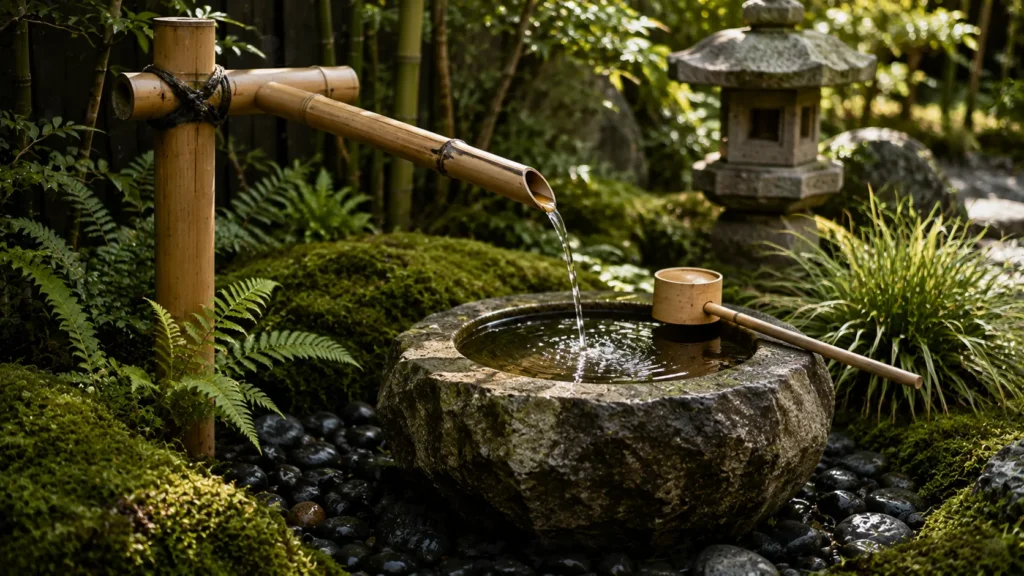
- Adds soothing sound without needing a large fountain.
- Creates a relaxing atmosphere near seating areas.
- Complements both modern and traditional gardens.
- Softens hard landscaping with natural materials.
- Requires only a small footprint to make an impact.
Gentle flowing water can completely change the mood of an outdoor space, and a bamboo water feature delivers that effect with remarkable simplicity. A slender bamboo spout feeding a carved stone basin creates soft movement while preserving the clean, minimalist character of the landscape. Position it beside a pathway or quiet seating area where the sound can be fully appreciated. Surrounded by moss, ferns, and smooth pebbles, the feature feels naturally connected to the environment instead of appearing like a decorative afterthought.
Thoughtful placement makes the sound feel relaxing rather than distracting. I’ve seen this work well when the water feature is partially framed by shrubs that soften nearby noise while keeping the basin visible. Choose natural bamboo and stone that will weather gracefully over time instead of polished materials that feel too modern. Keep nearby accessories minimal so attention stays on the gentle flow of water. The finished corner becomes a peaceful escape where texture, movement, and sound work together to create lasting tranquility.
13- Evergreen Pine Cluster
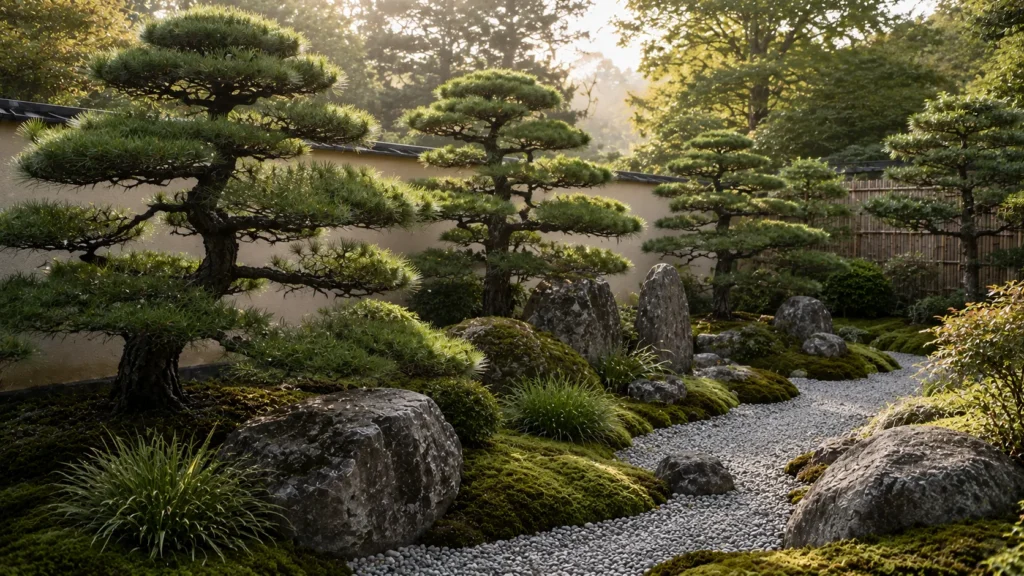
- Keeps the garden attractive all year long.
- Adds height without overwhelming smaller spaces.
- Creates a strong natural focal point.
- Pairs beautifully with gravel, rocks, and moss.
- Requires fewer seasonal changes than flowering plants.
Evergreen pines bring lasting structure that anchors the landscape through every season. Instead of planting a single specimen, group two or three compact pines with different heights to create a more natural composition. Surround the base with moss, gravel, and carefully placed stones to highlight the sculptural branching without unnecessary distractions. Their rich green color provides a steady backdrop while neighboring plants change throughout the year. This layered arrangement makes the garden feel mature, balanced, and visually calming from every viewing angle.
Choosing slower-growing varieties helps maintain the graceful proportions that define this style. That’s why many designers recommend allowing generous space between each tree so every shape can be appreciated individually. I’ve noticed that subtle pruning keeps the branching elegant without making the trees appear overly formal. Limit colorful flowers nearby and let textures become the visual focus instead. As the years pass, the pines develop even greater character, giving the entire outdoor space a timeless sense of stability and quiet sophistication.
14- Moss Garden Carpet
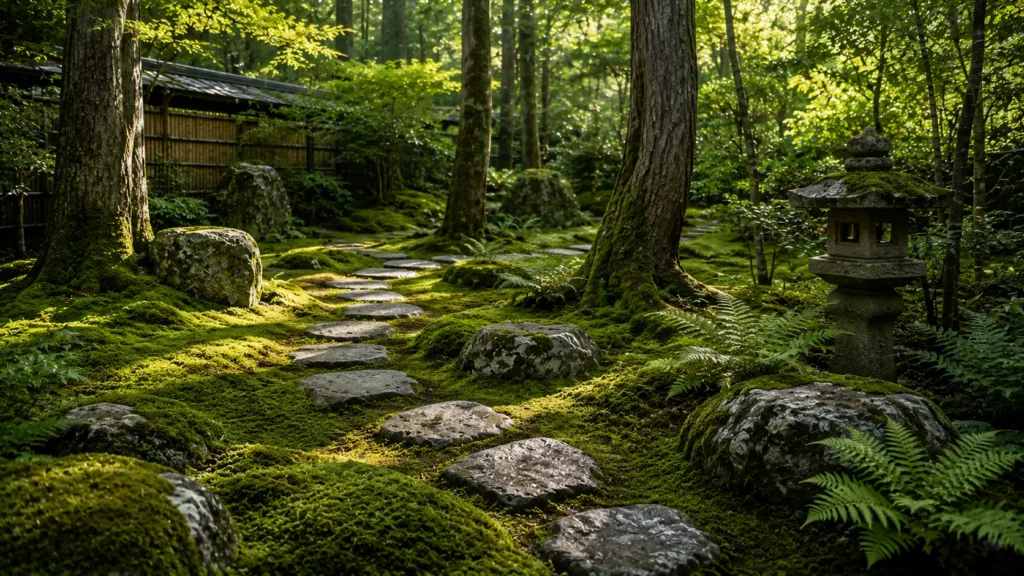
- Creates a soft, natural-looking ground cover.
- Reduces the need for traditional lawns.
- Makes shaded areas feel lush and intentional.
- Enhances the beauty of stone pathways.
- Brings rich texture with minimal visual clutter.
Few garden features create such an immediate feeling of tranquility as a carpet of vibrant moss. In shaded areas where grass often struggles, moss naturally fills the ground with soft texture and rich color. Pair it with weathered stepping stones, natural rocks, and delicate ferns to create gentle contrasts that never feel overwhelming. The smooth green surface reflects light beautifully after rain, adding freshness throughout the landscape. Even small spaces appear more established when the ground is covered with this living, velvety layer.
Among the most timeless Japanese Garden Ideas, moss remains one of the simplest ways to achieve an authentic atmosphere. In my experience, keeping foot traffic limited helps moss thrive while preserving its lush appearance. Water occasionally during dry periods and remove fallen debris so the surface stays healthy and vibrant. Avoid surrounding it with overly bright flowers that compete for attention. The result is a peaceful outdoor setting that feels cool, natural, and beautifully connected to the surrounding trees and stone features.
15- Minimalist Courtyard Layout

- Makes compact gardens feel open and uncluttered.
- Highlights every design element with purpose.
- Requires less maintenance than heavily planted layouts.
- Creates a calming atmosphere for everyday use.
- Works beautifully in modern and traditional homes.
Sometimes the most memorable outdoor spaces include fewer elements rather than more. A minimalist courtyard combines pale gravel, carefully positioned stepping stones, sculptural rocks, and a handful of well-chosen plants to create effortless harmony. Every feature has room to breathe, making the landscape appear larger and more refined. A simple wooden bench provides a quiet place to pause without interrupting the clean composition. This restrained approach encourages appreciation of texture, light, and natural materials instead of relying on excessive decoration.
The secret to lasting beauty is resisting the temptation to fill every empty space. I’ve seen this work well in both compact city gardens and larger backyards because the balanced layout naturally feels peaceful. Choose high-quality materials with muted colors so they age gracefully together over time. Small adjustments, like repositioning one stone or trimming a shrub, can noticeably improve the overall composition. The finished courtyard feels calm, timeless, and welcoming, offering a relaxing outdoor retreat that remains elegant throughout every season.
Conclusion
Creating a peaceful outdoor retreat doesn’t require a complete landscape makeover. With the right Japanese Garden Ideas, you can introduce beauty, balance, and tranquility one thoughtful feature at a time. Whether you begin with a stone pathway, a maple tree, or a simple gravel courtyard, each small improvement brings your garden closer to a calm and welcoming escape. I’ve seen how simple changes like these can completely transform a space. Save this guide to Pinterest for future inspiration, try your favorite ideas in your own yard, and share it with anyone dreaming of a more peaceful outdoor sanctuary.